-
Research
-
Publications
-
All publications
-
Benner, SA
-
Biondi, E
-
Bradley, K
-
Chen, C
-
Hoshika, S
-
Karalkar, N
-
Kim, HJ
-
Kim, MJ
-
Laos, R
-
Leal, NA
-
Li, Y
-
Richards, N
-
Shaw, RW
-
Spacek, J
-
Yang, ZY
-
People
-
Benner, Steven
-
Biondi, Elisa
-
Bradley, Kevin
-
Chen, Cen
-
Darling, April
-
Hoshika, Shuichi
-
Karalkar, Nilesh
-
Kim, Hyo-Joong
-
Kim, Myong-Jung
-
Laos, Roberto
-
Leal, Nicole
-
Li, Yubing
-
Richards, Nigel
-
Shaw, Ryan
-
Spacek, Jan
-
Yang, Zunyi
-
News and Events
-
Press Coverage
-
Our Foundation
|
Welcome to the
Foundation for Applied Molecular Evolution
The last half century of medical research has placed chemical structures behind much of biology, including human disease, the human genome, and the origin of life. Scientists at the Foundation have contributed broadly to these activities through innovative and polydisciplinary research in fields as diverse as chemistry, informatics, biology, geology, and astronomy. We are now taking the next steps, to place biological chemistry within its larger "systems" context, from the cell to the organism, and from there to the ecosystem and the planet. Emerging from this are new tools for systems biology and personalized medicine, as well as answers to some "big" questions: Where did we come from? What is our future? Are we alone?
Latest News and Events
•
June 12, 2025. Watch the H2M2 2025 panel, Innovating Sustainability on Mars - Improving Life on Earth, as experts explore how emerging technologies for Mars exploration can help address pressing challenges on Earth. Dr. Steven Benner joined the discussion as a featured panelist.
•
April 7, 2025. Dr. Jan Špaček will give a talk, titled Hunting aliens: Venus is interesting, Mars is urgent, at Breakthrough Discuss at the University of Oxford on April 24th, 2025.
•
August 14, 2024. The Foundation was listed in the 2024 annual NASA Spinoff publication which highlights the benefits of NASA research and development of cutting edge technologies
•
June 25, 2024. Steven Benner was featured on "Special Report" as Bret Baier reports on NASA's plans to begin searching for life on other planets.
•
April 25, 2024. Dr. Jan Špaček discussed how to search for extant life on Mars and why is it important to do it before we send humans there on the Red Planet Live podcast.
•
January 23, 2024. A Space.com article exploring the quest for life on Mars and the challenges of sample-return mission spotlights the groundbreaking efforts led by Foundation researchers Steven Benner and Jan Špaček at FfAME and the Agnostic Life Finding Association (ALFA).
•
October 16, 2023. The Department of Chemistry of the University of Basel and the Camille & Henry Dreyfus Foundation annouced Dr. Steven Benner as lecturer for the Camille & Henry Dreyfus Lectures 2023. The Lectureship annually hosts a prominent U.S. chemist at the Basel campus for talks and discussions with faculty and students, fostering collaboration between Swiss and U.S. science.
|
Press Coverage
•
Nature: FfAME researcher Elisa Biondi's work is cited in an article on RNA and the origin of life
March 2, 2023
•
WCJB - Gainesville: Vedant Karalkar, a local student being mentored at the Foundation, became a finalist in the "Genes in Space" competition
June 3, 2022
•
Chemistry World: FfAME researcher Elisa Biondi gives input on how mineral surfaces promoted variation in prebiotic RNA.
March 5, 2019
•
The New York Times: Work at the FfAME was the topic of an article by the noted science journalist Carl Zimmer in today's New York Times.
February 21, 2019
•
LifeScience: LiveScience reviewed today recent work done at the FfAME and Firebird Biomolecular Sciences expanding the DNA genetic alphabet.
February 21, 2019
•
ChemistryWorld: Katrina Kramer writes about how FfAME's 8-letter genetic code hints at how alien life might evolve
February 21, 2019
•
ORF.at Science: Austrian news outlet ORF.at details research at FfAME and Firebird Biomolecular Sciences that was recently published in Science.
February 21, 2019
•
Popular Mechanics: Steven Benner is featured in an article about how a maelstrom of molten iron could have been the basis for life on Earth.
January 15, 2019
•
Science Magazine: Research from FfAME's 2018 OOL Atlanta Conference is highlighted in a discussion on the RNA first model of the origins of life.
January 11, 2019
•
New Scientist: Work at the Foundation on the origin of life was a focus of a piece by Penny Sarchet in the June 2018 edition of New Scientist.
June 13, 2018
|
|
Look inside
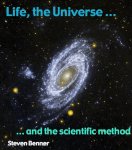
With cartoons by Jake Fuller, Steven Benner explains how scientists tackle big questions: What is life? How did it begin? If we encounter life in our galactic travels, how would we know it? Learn more.

Looking for reagents used at FfAME? Please visit Firebird Biomolecular Sciences, LLC.
Go To Site
|
|